
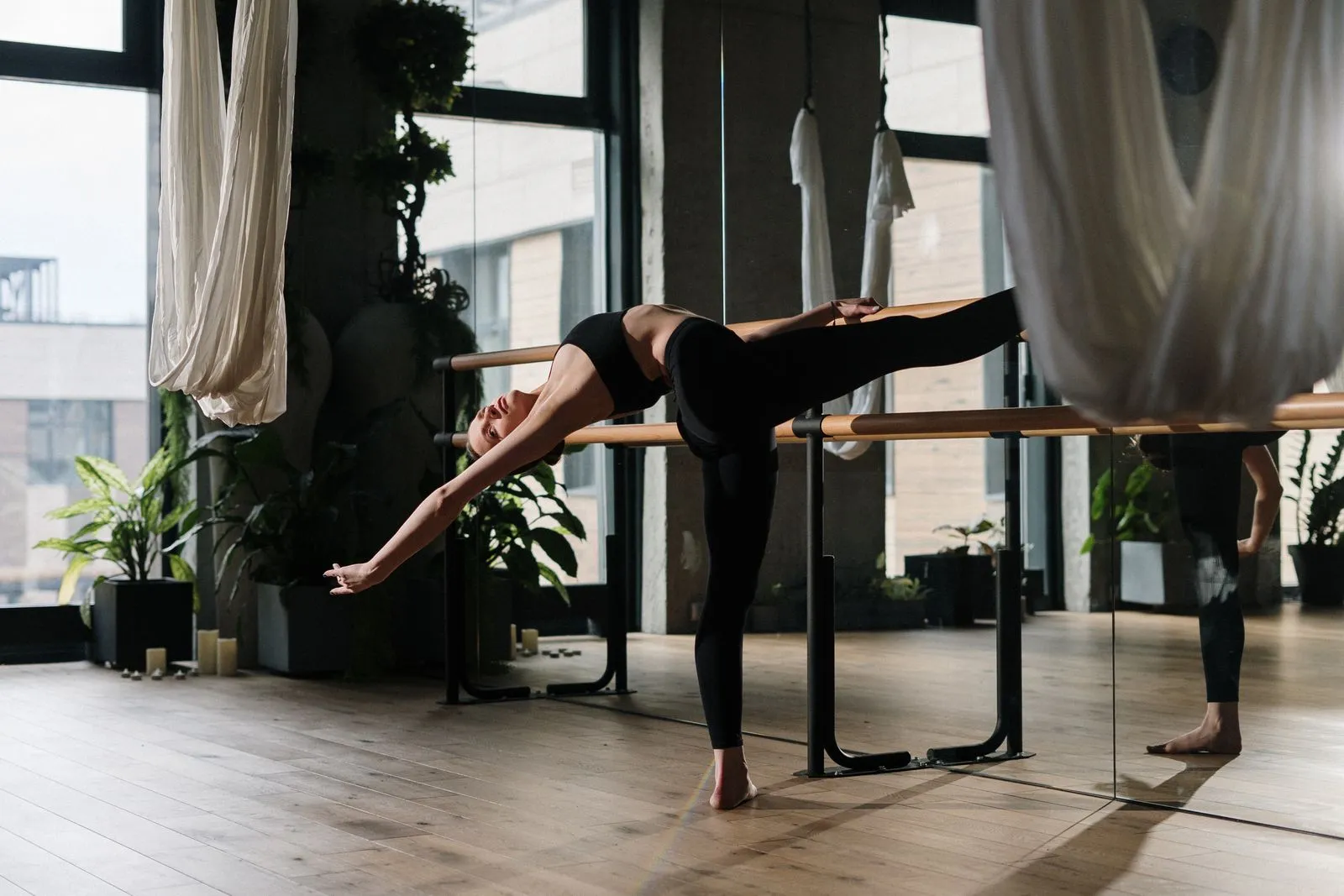
Barre can be adapted during pregnancy, but the same position may feel different from one week to the next. Changes in balance, joint comfort, and breathing can affect how a familiar move feels. Use a stable support, choose a comfortable range, and treat symptoms as a cue to adjust or stop. Before continuing or starting a class, ask your prenatal care provider what activity is appropriate for you, especially if you have pregnancy complications or specific exercise restrictions.
Make balance the priority
As your center of gravity shifts, standing on one leg or moving quickly between positions may feel less steady. Keep one or both hands on a barre, countertop, or sturdy chair for support. Stand close enough to reach it without leaning, and avoid using furniture that can slide or tip.
Widen your stance slightly and keep both feet grounded when possible. Replace single-leg balances with a supported position, such as resting your toes lightly on the floor instead of lifting a leg. Move slowly during transitions, and skip turns or steps that make you feel unsteady.
Choose a comfortable range
You do not need to lower as far or lift as high as you did before pregnancy. Use a smaller bend in pliés and knee bends, and avoid forcing a deep stretch. Keep each movement smooth and controlled; stop short of any position that causes pain, pulling, or pressure.
For leg lifts, raise your leg only as high as you can while keeping your hips level and your torso upright. If your back arches or your balance shifts, lower the leg or replace the lift with a small standing tap. A reduced range still lets you practice controlled movement without chasing a particular shape or depth.
Adjust positions and pace
If lying flat on your back feels uncomfortable, make the exercise upright, seated, or side-lying instead. For floor work, use cushions or a wedge to support your upper body, and move out of the position if you feel lightheaded, nauseated, or short of breath. Ask your care provider or instructor which alternatives fit your needs.
Take breaks before you feel depleted, drink water, and avoid holding your breath. You should be able to speak comfortably while exercising. If a sequence feels too fast, slow it down or rest rather than trying to keep pace with the class.
Use comfort as your guide
Pregnancy can change how your joints and muscles respond to exercise. Avoid bouncing, abrupt direction changes, and stretches that push you to the edge of your range. Choose supportive shoes or go barefoot only if the floor feels secure, and wear clothing that lets you move without overheating.
Stop exercising and contact your prenatal care provider if you notice warning signs such as vaginal bleeding, fluid leakage, regular painful contractions, chest pain, dizziness, or shortness of breath that does not settle with rest. Follow any personal instructions from your provider, since safe adjustments depend on your health and pregnancy.
A good pregnancy modification should make a barre move feel steadier, more controlled, and comfortable—not more demanding. Use support, shorten your range, and pause whenever your body signals that something is off. Ask your prenatal care provider about any concerns, and consider a prenatal-focused class if you want guided options for adapting your routine.